How Long Do Egyptian Cotton Towels Last? — Egyptian cotton towel longevity
“Egyptian cotton towel longevity typically ranges from 3 to 10 years if the user adheres to low-heat laundering protocols and avoids chemical buildup.”
Egyptian cotton towel longevity typically ranges from 3 to 10 years if the user adheres to low-heat laundering protocols and avoids chemical buildup. While standard cotton alternatives may exhibit structural failure within 24 months, the superior tensile strength of Giza-grade fibers provides a significantly wider service horizon.
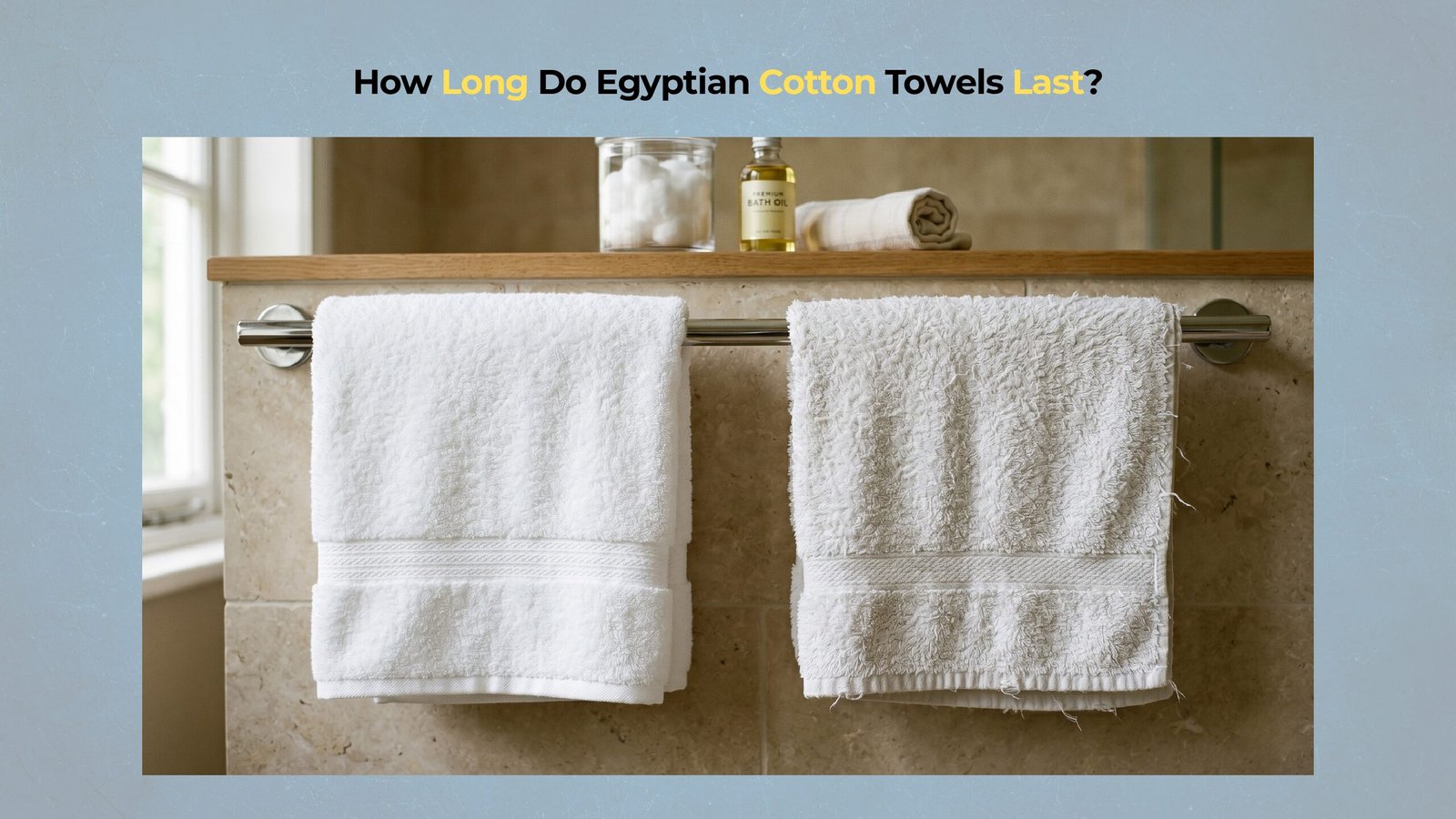
Figure 1: Long-term performance retention showing the delayed decay of Egyptian ELS fibers over 500+ wash cycles.
What defines the functional lifespan of Egyptian cotton?
Egyptian cotton towel longevity typically ranges from 3 to 10 years, but this depends heavily on fiber quality. High-grade fibers such as those explained in extra-long staple performance exhibit significantly greater tensile resilience compared to standard cotton.
Absorbency loss is often caused by residue buildup rather than structural failure. Understanding cotton absorbency factors helps diagnose performance decline early.
Define: Functional lifespan – The period during which a textile retains at least 80% of its original absorbency and tactile flexibility before structural thinning or mineral buildup necessitates replacement.
Does loop resilience dictate the rate of Egyptian cotton towel longevity?
Egyptian cotton towel longevity correlates with loop resilience if the yarn structure maintains its ability to “bloom” after repeated laundering cycles. When loops lose their verticality, the surface area available for water capture decreases exponentially.
Textile Research Journal: Principles of Pile Recovery in Terry Fabrics indicates that a measurable decline in loop volume occurs when the internal twist of the yarn becomes permanent due to mechanical stress. This is often described by the Fiber Fatigue Behavior Model (descriptive model), where individual fibers within the loop begin to slip out of their anchorage, leading to a flatter, less absorbent surface.
How is the lifecycle of luxury towels measured?
Material selection plays a critical role in lifespan, as outlined in our broader towel material comparison guide, where durability differences between cotton, microfiber, and synthetic blends are analyzed.
Structural thinning occurs when the towel loses a significant portion of its original mass—often evidenced by light passing through the center of the towel more easily than the borders. A high GSM (Grams per Square Meter) towel acts as a wear buffer, providing more material volume to sacrifice before the base weave is exposed.
Define: Structural thinning – The reduction of fiber mass in the central contact zone of the towel, leading to a visible decrease in opacity and pile density.
Why does fiber length determine towel lifespan?
Increases in Egyptian cotton towel longevity correlate with staple length because longer fibers—typically 1.25 inches or more—facilitate superior anchorage within the yarn. In standard Upland cotton, shorter fibers rely on more “twist” to stay together, which creates a harsher feel and increases the probability of fibers snapping or shedding during agitation.
This physical property is known as Tensile Resilience. Because the fibers are longer, they overlap more extensively, creating a stronger internal “grip.” This reduces surface pilling and prevents the “balding” of towel loops over hundreds of wash cycles.
Does tensile strength influence Egyptian cotton towel longevity thresholds?
Egyptian cotton towel longevity thresholds increase if the material exhibits the significantly higher tensile strength characteristic of Giza-grade ELS cotton. According to Cotton Incorporated: Technical Bulletin on High-Strength ELS Spinning, ELS fibers can sustain up to 30% more mechanical stress before fiber breakage occurs.
This is explained by the Staple Anchorage Friction Model (descriptive model), where the increased surface area of the long fiber creates more points of contact within the yarn, distributing tension more evenly.
Comparing Egyptian cotton durability to standard and Turkish varieties
Compared to alternatives, Egyptian cotton outperforms many materials in long-term durability. For example, Turkish cotton long-staple performance offers balanced drying and softness but generally does not match the extended lifecycle potential.
| Material Type | Typical Lifespan | Durability Profile | Longevity Rating |
|---|---|---|---|
| Egyptian (ELS) | 5 – 10 Years | Maximum tensile resilience | MAXIMUM |
| Turkish (Aegean) | 3 – 7 Years | Balanced durability/drying | HIGH |
| Bamboo Blend | 2 – 4 Years | Lower structural stability | MEDIUM |
| Standard Cotton | 1 – 2 Years | High rate of fiber breakage | LOW |
Synthetic alternatives like microfiber behave differently, prioritizing fast drying over long-term durability, as explored in microfiber durability lifespan.
Which quality factors influence total towel life?
Optimizing Egyptian cotton towel longevity results from selecting heavy weight (600–900 GSM) and certified Giza-grade yarns that utilize reinforced double-stitched hems. Combing is another critical factor, as it removes the shorter, weaker fibers that would otherwise shed and thin the towel prematurely.
Define: Reinforced hem integrity – The use of double-locking stitches at the towel’s border to prevent unraveling of the base weave during high-speed centrifugal extraction cycles.
Laundry habits to preserve towel texture and life
Improper washing habits significantly reduce towel lifespan. Using harsh chemicals can accelerate fiber breakdown, as explained in bleach fiber weakening analysis.
Likewise, excessive heat exposure damages cellulose structure over time. Following low heat drying protocols helps preserve fiber integrity and extend usable lifespan.
Does thermal stress decrease Egyptian cotton towel longevity?
Egyptian cotton towel longevity decreases if high thermal settings trigger the scission of cellulose chains within the yarn loops. Cotton Incorporated: Technical Standards for Thermal Degradation in Cellulose notes that the Cellulose Chain Scission Model (descriptive model) initiates once fibers reach brittleness thresholds under repeated over-drying.
Identifying when Egyptian cotton towels reach end-of-life
Terminal failure for Egyptian cotton towel longevity initiates if the fibers exhibit permanent “scorching” or if zero volumetric recovery occurs after a restorative wash. The “musty smell trap” is a diagnostic indicator of fiber rot caused by years of humidity that indicates the conclusion of the textile’s hygienic life.
Define: Fiber scorching – Irreversible molecular damage to cotton cellulose resulting in brittle, yellowed fibers that have lost their hydrophilic capacity.
Audit checklist for verifying remaining Egyptian cotton towel longevity
☐ Structural integrity is confirmed if no “thin spots” are visible when held to a light source.
☐ Stability is maintained if a vigorous shake results in minimal lint release.
☐ Performance is verified if the weight remains within most of the original GSM mass.
☐ Hygiene is secured if the textile remains odor-free after a complete drying cycle.
Frequently Asked Questions about towel lifespan
How often should I replace Egyptian cotton towels?
Egyptian cotton towel longevity generally requires replacement every 3 to 10 years in home settings; replace sooner if you notice visible thinning or a permanent loss of absorbency.
Do towels lose their absorbency over time?
Yes, Egyptian cotton towel longevity decreases if waxy softeners or high heat create a permanent hydrophobic barrier on the fibers.