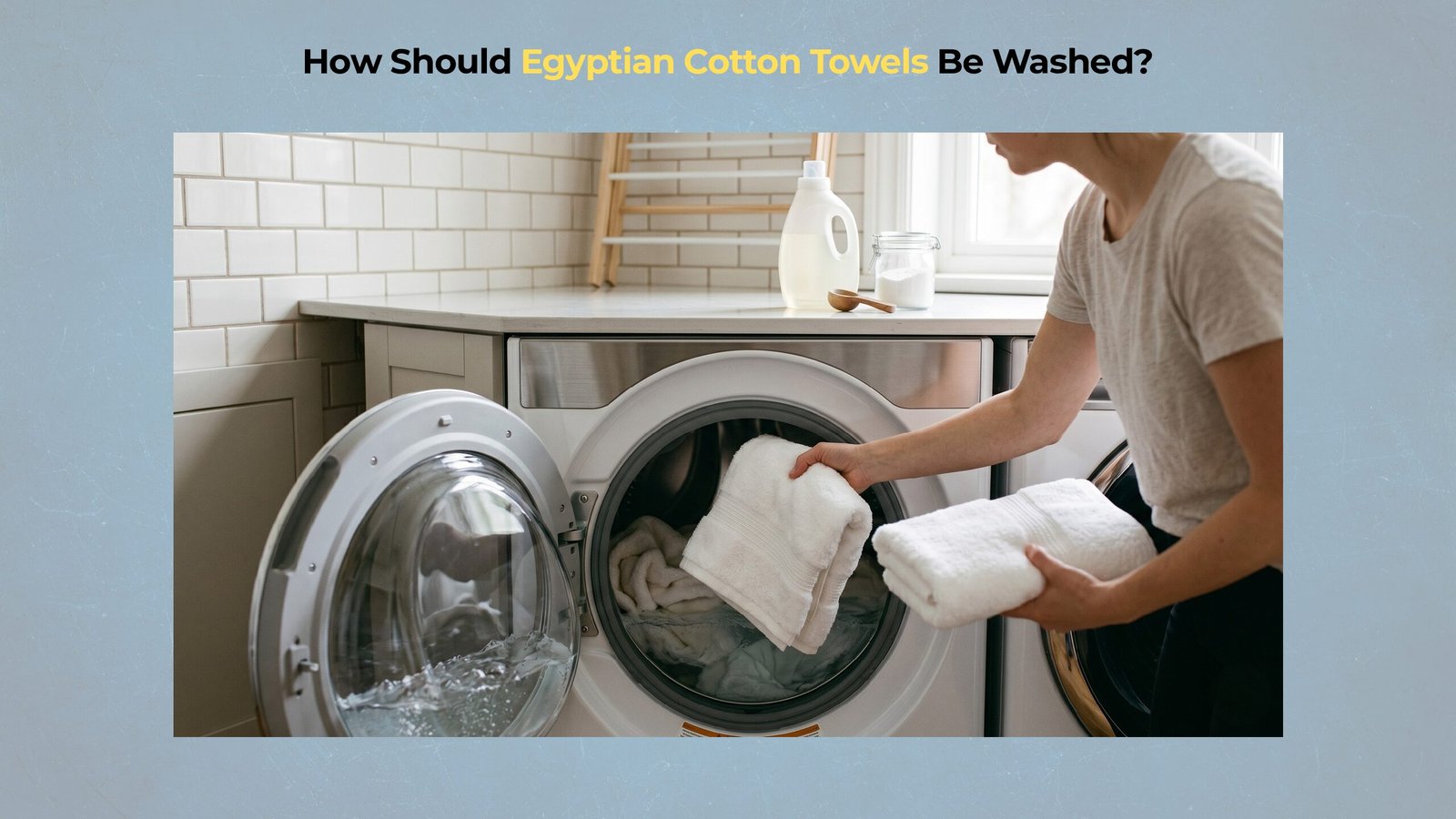
How Should Egyptian Cotton Towels Be Washed?
Technical protocols for fiber longevity and performance maintenance.
Egyptian cotton towel washing requires a specialized protocol utilizing warm water (~30–40°C), mild low-residue detergents, and the total exclusion of chemical softeners to preserve the high hydrophilic capacity of the Extra-Long Staple (ELS) fibers. By adhering to rigorous laundering standards, domestic users protect the intricate cellulose structural integrity of Giza cotton, ensuring that these high-density textiles retain their superior hygroscopy and tensile strength over hundreds of cycles, thereby maximizing the functional lifecycle and the total economic utility of the material.
Extra-Long Staple (ELS) fibers serve as the fundamental architectural unit of these premium linens. These elongated cellulose chains provide the tensile strength necessary to withstand the mechanical agitation of modern laundry cycles while maintaining a high surface area for moisture adsorption. Giza cotton, specifically, exhibits a unique molecular orientation that allows for greater elasticity compared to standard upland cotton varieties.
How does correct Egyptian cotton towel washing protect fiber integrity?
Correct Egyptian cotton towel washing protects fiber integrity by preventing the excessive fiber wear and residue buildup often caused by high thermal settings and harsh surfactants. Harsh surfactants act as aggressive degreasers that can strip the natural protective waxes from the cellulose surface. This chemical stripping leads to brittle fibers that are more prone to breakage during the tumble-drying phase.
Technical Insight
Definition: Fiber relaxation shrinkage refers to the physical contraction of yarns when internal stresses, introduced during spinning and weaving, are released through the introduction of moisture and thermal energy.
Fiber relaxation shrinkage occurs when high temperatures agitate the yarn structure beyond its elastic limit. Industry research indicates that repeated exposure to water exceeding 60°C causes the ELS fibers to tighten prematurely, resulting in a stiff, non-responsive textile hand. Maintaining a stable temperature range prevents this permanent deformation of the weave.
Tactile smoothness is maintained through the preservation of the individual loop alignment. When washing is performed at optimal parameters, the loops remain upright and flexible. This orientation ensures that the skin-to-fiber contact remains gentle, preventing the abrasive sensation associated with collapsed or matted cotton loops. Softness and pile density often influence how absorbent a towel feels during use, especially when comparing plush and lightweight styles. To understand this relationship, it is useful to review how towel softness relates to comfort, density, and moisture performance.
Why is fiber preservation the primary goal of Egyptian cotton towel washing?
Egyptian cotton towel washing prioritizes fiber preservation because the long-staple structure is susceptible to gradual performance degradation when surfactant residues block the hydrophilic pathways. Surfactant residues create a microscopic barrier that prevents water from reaching the inner core of the cotton fiber. This blockage significantly reduces the overall hydrophilic capacity of the towel over time. High absorbency is also influenced by towel density, pile height, and weave design rather than fiber type alone. To connect this with broader buying decisions, it is useful to review what determines towel absorbency and how it affects everyday performance.
Hydrophilic capacity is the metric used to define how much water a material can hold relative to its own mass. In Egyptian cotton, this capacity is naturally superior due to the higher density of the fibers. Preserving this attribute ensures that the towel performs its primary function of efficient moisture removal without requiring multiple passes over the skin. The absorbency of Egyptian cotton towels begins with the moisture-handling advantages of extra-long staple fibers, which create dense yet efficient yarn structures. To understand this foundation, it is useful to explore how extra-long staple Egyptian cotton fibers improve towel absorbency and long-term performance.
How do you prepare for Egyptian cotton towel washing to prevent mechanical damage?
Preparing for Egyptian cotton towel washing involves segregating these high-density linens from abrasive items like zippers or hooks to minimize mechanical friction and fiber entanglement. Mechanical friction during the wash cycle can lead to “pilling,” where short fibers break and tangle on the surface. Principles aligned with textile testing standards suggest that washing towels exclusively reduces the risk of such surface degradation.
Definition: Fiber entanglement occurs when individual cotton filaments wrap around each other or external objects, causing localized knots that reduce the tactile smoothness of the textile.
Sorting by weight is a critical secondary step in the preparation process. When heavy towels are washed with lighter garments, the unequal distribution of mass in the drum can cause erratic spin cycles. This imbalance leads to uneven cleaning and potential structural stress on the towel’s base weave. Thicker and heavier towels often retain more water, which can improve drying comfort but also increase saturation time. Since this directly affects usability, you may want to explore how towel weight affects absorbency, handling, and drying behavior.
Which cycle settings optimize Egyptian cotton towel washing performance?
Optimizing Egyptian cotton towel washing performance requires selecting a ‘Normal’ cycle with an extra rinse phase to ensure the total removal of surfactant residue without sacrificing cleaning efficacy. Warm water (~30–40°C) is effective for dissolving body oils without triggering excessive fiber stress. Thermal energy at this level provides sufficient kinetic assistance to the detergent without compromising the cellulose bonds.
Definition: Thermal fiber stress refers to the physical degradation of cellulose molecules caused by rapid temperature fluctuations or extreme heat, leading to brittle yarn structures.
Optimal Cycle Matrix
| Parameter | Recommended Setting | Technical Justification |
|---|---|---|
| Water Temperature | 30°C – 40°C | Dissolves sebum while preventing thermal fiber stress. |
| Cycle Type | Normal / Heavy Duty | Provides necessary agitation for high-density piles. |
| Rinse Phase | Double / Extra Rinse | Ensures total removal of surfactant molecules. |
| Spin Speed | Medium-High | Removes excess moisture to reduce drying time. |
How do you choose detergents to avoid overuse during Egyptian cotton towel washing?
Choosing detergents for Egyptian cotton towel washing necessitates selecting mild, low-residue formulas and avoiding overuse to prevent the accumulation of mineral salts and soap scum. Detergent quantity must be calibrated according to local water hardness levels. In hard water areas, mineral salts can bind with soap to form insoluble precipitates that stiffen the fibers. Maintaining absorbency over time depends on preventing detergent buildup and preserving fiber openness during laundering. To connect this with everyday care, it is useful to review what care instructions should be followed to preserve towel absorbency and longevity.
Definition: Hydrophobic wax coating is a layer of fatty acids or silicones (common in fabric softeners) that creates a slick feel but renders the cotton fiber incapable of absorbing water.
Detergent & Additive Comparison
| Additive Type | Impact on ELS Fibers | Recommendation |
|---|---|---|
| Mild Liquid Detergent | Cleans without stripping natural waxes. | Primary Choice (Half Dose) |
| Fabric Softener | Creates hydrophobic wax coating. | Total Exclusion |
| White Vinegar | Dissolves mineral salts and soap scum. | Final Rinse Additive |
| Baking Soda | Neutralizes acidic odors and softens water. | Use with Restoration Cycle |
What common errors interfere with Egyptian cotton towel washing efficiency?
Identifying errors that interfere with Egyptian cotton towel washing efficiency is critical for preventing the fiber weakening caused by chlorine bleach and excessive drying heat. Excessive drying heat is the single most common cause of towel degradation. When cotton is over-dried, the moisture level drops below its natural equilibrium, leading to structural fragility.
Definition: Fiber weakening is the reduction in the tensile strength of cotton yarns caused by chemical oxidation (bleach) or thermal dehydration (over-drying).
How can you restore absorbency through corrective Egyptian cotton towel washing?
Restoring absorbency through corrective Egyptian cotton towel washing involves an acidic rinse using acetic acid to dissolve accumulated mineral salts and surfactant buildup. Acetic acid, found in white vinegar, is a mild solvent that effectively breaks the bonds of soap scum. This process is often referred to as “towel stripping” in domestic contexts.
Definition: Acidic rinse is the application of a column-pH solution during the final stages of laundering to neutralize alkaline residues and dissolve mineral deposits.
Hydrophilic restoration is achieved when the fiber pathways are cleared of obstructions. Logic aligned with textile testing standards suggests that removing these barrier layers allows the cotton’s natural hygroscopy to function at 100% capacity. Following an acidic rinse with a baking soda (sodium bicarbonate) wash can further help by removing lingering odors and brightening the fabric.
Surfactant buildup can be identified by a “slick” feeling when the towel is wet or a noticeable drop in how quickly it dries the skin. Once the restorative wash is complete, the towel should feel slightly more textured and significantly more responsive to water contact. If you want to compare Egyptian cotton with other towel materials based on absorbency, drying speed, and overall feel, you can use a towel finder tool to match materials to your preferences and needs.
Frequently Asked Questions about Egyptian Cotton Towel Washing
Does fabric softener permanently damage Egyptian cotton towel washing efficiency?
Fabric softener does not cause permanent structural damage to the cellulose, but it creates a cumulative hydrophobic wax coating that renders the towel non-absorbent. To reverse this, a corrective acidic rinse must be performed. Avoiding softeners entirely is the industry standard for maintaining the long-term material utility of ELS fibers.
Why do Egyptian cotton towels take longer to dry during the washing process?
The extended drying time is a direct result of the high hydrophilic capacity and extreme fiber density inherent in Giza cotton. Because ELS fibers hold significantly more water than standard cotton, they require more thermal energy and airflow to reach equilibrium. Using a ‘Low’ heat setting for a longer duration is safer than a ‘High’ heat setting for a shorter duration. Greater moisture retention can also slow drying speed, especially in humid environments. Because of this trade-off, it is helpful to understand how quick-dry performance impacts towel usability and moisture control.
How often should corrective Egyptian cotton towel washing be performed?
Corrective washing using an acidic rinse should be performed approximately every six cycles or whenever a decrease in wicking performance is observed. This frequency prevents the permanent crystallization of mineral salts within the fiber core. Regular corrective maintenance is essential for users living in geographic regions with high water hardness.
Can I wash Egyptian cotton towels with other textiles to save time?
Washing Egyptian cotton towels with non-towel textiles is discouraged due to the risk of fiber entanglement and pilling. Different materials have varying levels of surface abrasion; for instance, synthetic fibers can catch on the delicate loops of ELS cotton. Segregation ensures that the tactile smoothness and structural integrity of the pile are maintained.
Which checklist ensures maximum rinse efficiency for Egyptian cotton towel washing?
Using this checklist to verify Egyptian cotton towel washing protocols facilitates a final audit of water temperature, detergent dosing, and rinse efficiency. Each check ensures that the material science principles of ELS cotton are being respected during the maintenance process.
Final Laundering Checklist
Technical Disclaimer
The laundering protocols described herein are based on textile engineering principles and general industry standards for Giza and Extra-Long Staple (ELS) cotton. However, results may vary significantly based on local water hardness, specific chemical formulations of detergents, and the mechanical calibration of residential laundry appliances. Always prioritize the instructions provided on the textile’s permanent care label. Toweldaily.com assumes no liability for damage to linens resulting from improper execution of these restorative or maintenance procedures.