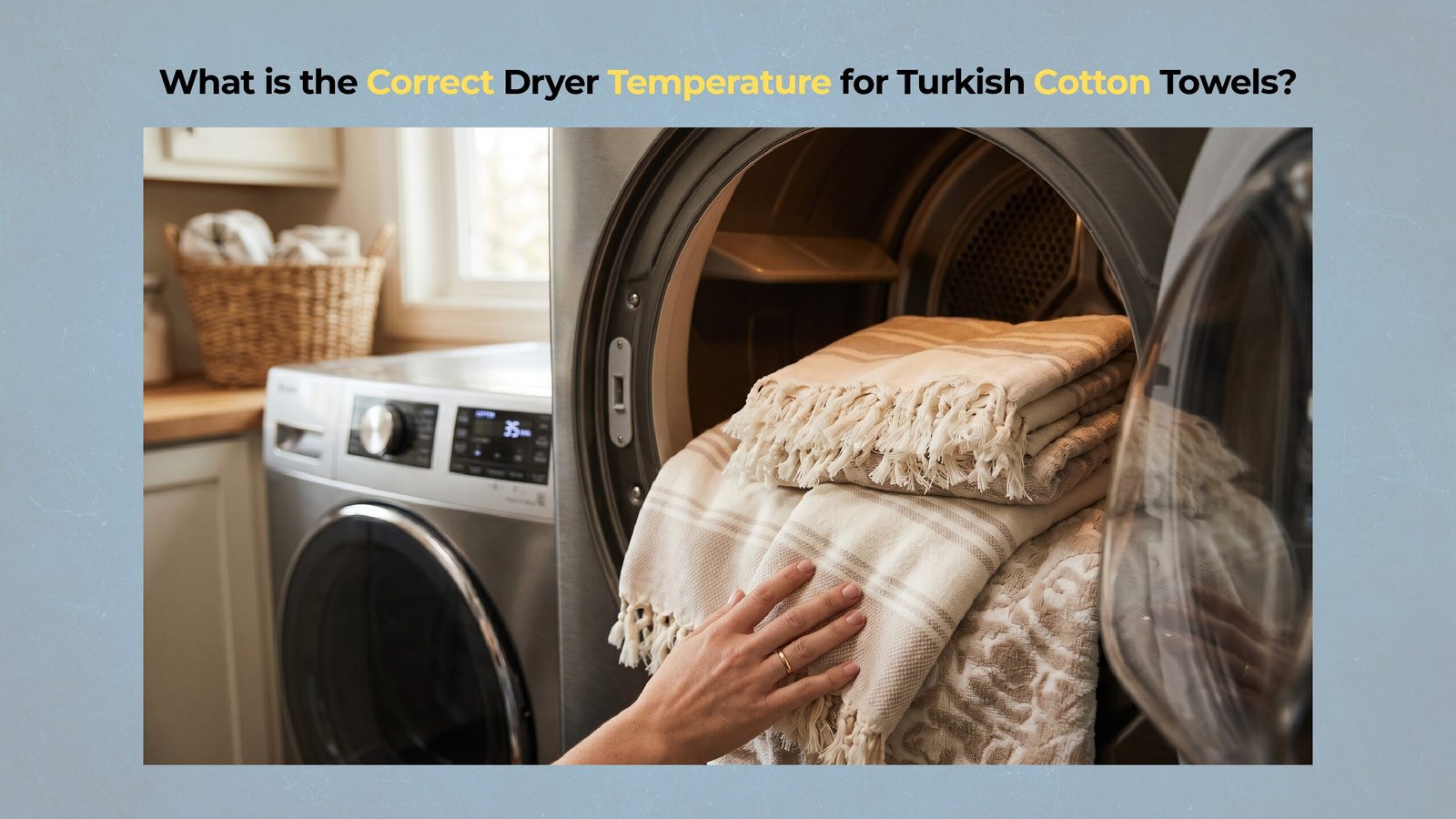
What is the Correct Dryer Temperature for Turkish Cotton Towels?
The correct Turkish cotton towel dryer temperature must remain below 120°F (48°C) to prevent the thermal degradation of long-staple fibers and maintain the fabric’s signature loft.
Preserving the structural integrity of premium long-staple cotton requires precise thermal management. By restricting drum heat and prioritizing high-volume airflow, owners can extend the lifecycle of their linens, ensuring consistent absorbency and plushness while minimizing the risk of permanent fiber damage through excessive dehydration and molecular weakening.
There is a visceral fear among luxury textile owners that a single aggressive laundry cycle will “toast” an expensive investment into scratchy, abrasive sandpaper. This guide serves as a technical safeguard against that outcome.
Why dryer temperature affects Turkish cotton towel lifespan
The selected heat level serves as the primary determinant for fiber longevity, as excessive temperatures can trigger a structural weakening of the cotton’s cellulose base.
Excessive heat alters the internal structure of long-staple cotton, leading to brittleness and reduced flexibility over time. Because this behavior originates at the microscopic level, it is helpful to understand what the fiber structure of Turkish cotton towels looks like and how it affects durability.
📚 Define: Thermal stress. In textile care, thermal stress is the mechanical strain and molecular disruption caused when long-staple fibers expand and contract rapidly due to high-heat cycles, leading to microscopic fractures in the cotton loops.
How does heat influence the fiber health of Turkish cotton towels?
High dryer temperatures (exceeding 140°F) increase the risk of fiber brittleness, as the long-staple cotton loses its essential internal moisture. Textile science dictates that the 60°C (140°F) threshold is critical; surpassing this point triggers the degradation of cellulose chains.
The correct dryer temperature for Turkish cotton towels directly affects how moisture is retained and released from the fiber. To understand how this interaction works, it is useful to explore how absorbent Turkish cotton towels are and how they manage moisture.
Excessive heat causes the individual fibers to lose elasticity, leading to “linting” (shedding) that thins the towel over time as the weakened loops break away during agitation.
What dryer temperature should you use for Turkish cotton towels?
The optimal thermal setting is typically achieved by selecting the ‘Delicate’ or ‘Low Heat’ cycle, which aims for a consistent environment between 100°F and 120°F.
From a practical standpoint, controlling heat is part of proper maintenance. To connect this with everyday care, it is useful to review what care instructions should be followed to protect towel performance.
📚 Define: Sensor drying. A sophisticated appliance feature that utilizes conductive sensors to measure the electrical resistance of the laundry, terminating the heat cycle the moment the target moisture level is reached to prevent over-baking.
Which cycles provide the safest Turkish cotton towel dryer temperature?
Settings such as ‘Air Fluff’ or ‘Timed Low’ are often safer than high-heat presets, as they utilize higher airflow volumes rather than extreme thermal spikes.
Be cautious of “Permanent Press” cycles; though marketed as gentle, they often include high-heat phases designed to de-wrinkle synthetics that can catch luxury towel owners off-guard.
How to choose the right temperature for different Turkish cotton towel weaves
Selecting the appropriate dryer heat involves evaluating the towel’s GSM (Grams per Square Meter), as denser fabrics require longer durations at lower temperatures.
| Towel Weave Type | Recommended Setting | Target Temperature Range | Estimated Duration |
|---|---|---|---|
| Flat-Woven (Peshtemal) | Air Fluff / No Heat | < 80°F (27°C) | 20-30 Mins |
| Medium Weight (400-600 GSM) | Delicate / Low | 100°F – 110°F | 45-55 Mins |
| Heavy Weight (700+ GSM) | Low Heat | 115°F – 120°F | 60+ Mins |
How to check the dryer heat level while drying Turkish cotton towels
Monitoring the dryer’s heat output during the cycle prevents ‘over-baking,’ ensuring the Turkish cotton towel retains its natural suppleness.
What physical checks verify a safe drying temperature?
A manual audit of the fabric’s temperature should include the ‘90% Dryness Test,’ where the towel is removed while the thickest hems still feel slightly cool to the touch.
If the towel feels uncomfortably hot to the sensitive skin on the back of your hand, the dryer is likely exceeding the 120°F safety limit and needs adjustment.
Avoid these high-heat mistakes that ruin Turkish cotton towels
Ignoring heat limits often results in fiber scorching and a scratchy texture caused by the extreme dehydration of the long-staple loops.
High dryer temperatures can also accelerate fiber damage and shorten the lifespan of the towel. Since this directly impacts long-term performance, you may want to explore how durable Turkish cotton towels are with regular use.
| Common Thermal Error | Resulting Fiber Damage | Corrective Action |
|---|---|---|
| Timed Dry (High Heat) | Fiber shrinking and brittleness | Use Sensor Dry on Low/Delicate |
| Overloading the Drum | Uneven heat and “hot spots” | Maintain half-loads for airflow |
| Back-to-back Cycles | Excessive residual drum heat | Let the dryer cool between loads |
How to fix stiffness caused by high Turkish cotton towel dryer temperatures
Texture stiffness resulting from improper heat levels can frequently be reversed by rehydrating the fibers through a mechanical softening process.
If your towels have already become stiff or damaged due to high heat, it is helpful to follow a guide to identifying and preventing premature towel degradation.
Can vinegar restore fibers damaged by excessive heat?
Distilled white vinegar can help restore flexibility to over-dried fibers by dissolving the alkaline residues that heat often ‘sets’ into the fabric. By facilitating a pH shift from alkaline to acidic, vinegar loosens the mineral deposits that physically lock cotton loops together, restoring the towel’s natural absorbency.
Tapping a damp cloth into a “No Heat” cycle with a stiff towel creates a light, cool steam that can help “massage” the fibers back to their open, breathable state.
Follow this checklist for safe Turkish cotton towel dryer temperatures
Adhering to a standardized checklist ensures that the drying environment remains within safe thresholds for every laundry cycle.
Turkish Cotton Towel Drying Task Fulfillment Checklist
- The appliance dial is verified as “Low Heat” or “Delicate” before activation.
- The temperature range is confirmed as staying below the 120°F (48°C) safety limit.
- High-heat presets like “Heavy Duty” are avoided in favor of moisture-sensor cycles.
- Towels are removed while 10% damp to allow for natural air finishing.
- The drum has been allowed to cool if the previous load utilized high heat.
Frequently Asked Questions (FAQ)
No. High-heat drying triggers immediate thermal stress and molecular degradation of the cellulose fibers. Even a short duration at temperatures exceeding 140°F can cause the fibers to lose their natural internal moisture, leading to permanent stiffness and increased shedding.
How do I fix towels that have become scratchy from high dryer temperatures?You can restore texture by rehydrating the fibers. Wash the towels with one cup of distilled white vinegar (no detergent) to strip away mineral buildup, then dry on a “Low Heat” or “No Heat” cycle with wool dryer balls to mechanically massage and open the cotton loops.
Why is my towel shedding so much lint after drying?Excessive lint is a primary symptom of fiber breakage caused by high heat. When the cotton loops become brittle from thermal exposure, they fracture and break away during drum agitation. Reducing your dryer temperature to below 120°F will significantly decrease linting and extend the towel’s lifespan.
Is it better to air-dry or machine-dry Turkish cotton towels?A hybrid approach is optimal. Use a “Low Heat” machine cycle until the towel is 90% dry to ensure the loops stay lofted and soft, then remove them while slightly cool to finish drying on a rack. Full line-drying can often lead to a “crusty” feel due to lack of mechanical movement.
⚠️ Disclaimer: The thermal guidelines provided in this document are based on standard textile care principles for 100% long-staple Turkish cotton. Actual results may vary depending on specific appliance calibration, local water hardness, and detergent chemical composition. Always consult the manufacturer’s care label located on your specific linen product before performing any laundry maintenance.