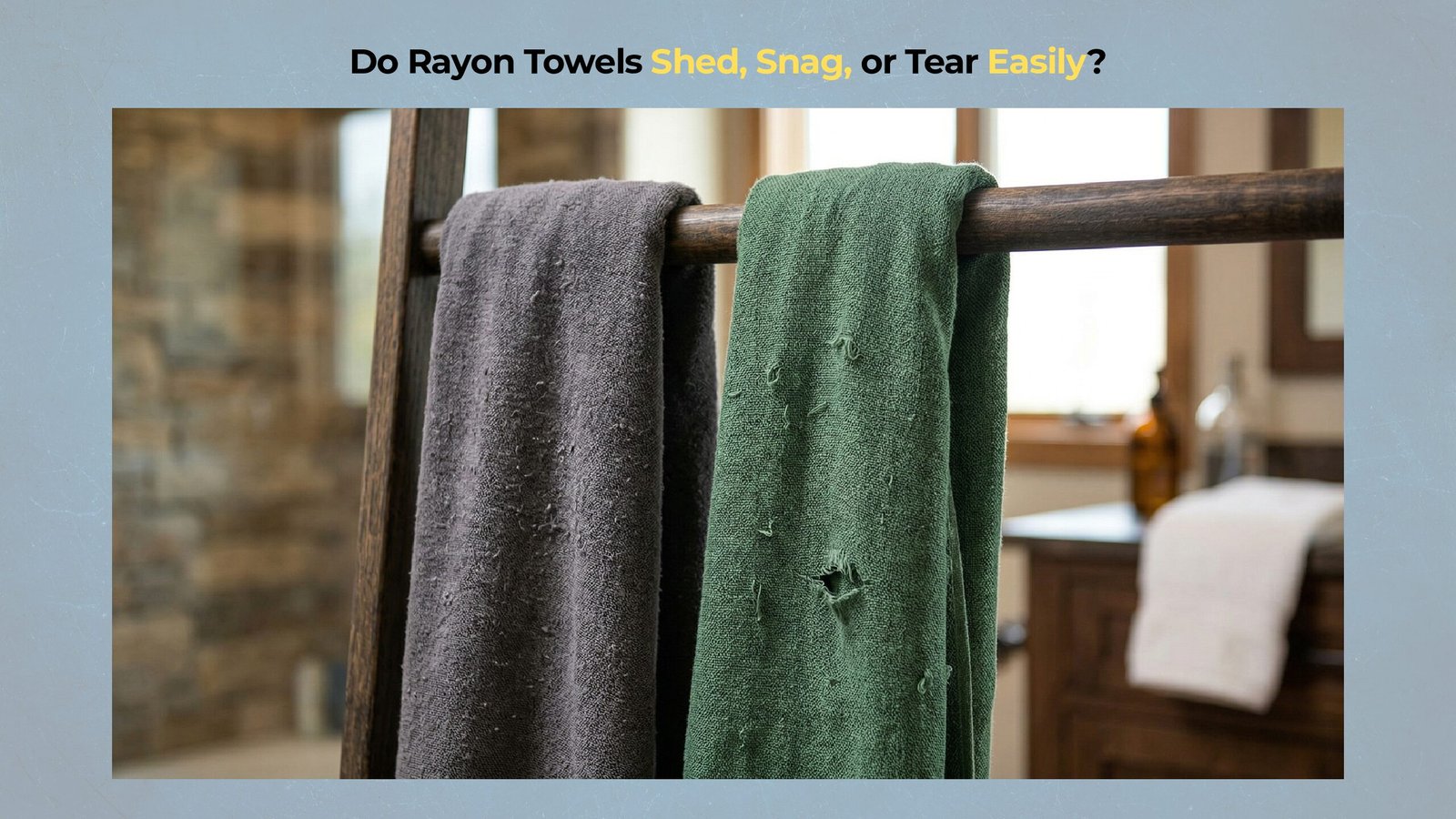
Do Rayon Towels Shed, Snag, or Tear Easily?
Technical Textiles Division
High-performance rayon towel structural integrity can maintain a smooth, low-lint surface for several years when users implement low-impact laundering protocols to protect the delicate molecular structure of regenerated cellulose. Unlike natural cotton, which sheds short-staple fibers as loose lint, rayon typically experiences “fiber fibrillation”—a surface texture change rather than mass loss. Understanding the mechanical wear of these fibers is essential for determining long-term utility and preventing visible wear.
Why Does Rayon Towel Structural Integrity Matter for Long-Term Utility?
Rayon towel structural integrity primarily determines the visible wear of your linens by dictating the rate at which surface pilling and fabric weakening compromise the textile’s luxury aesthetics. In residential environments, aesthetic preservation requires identifying the specific fiber fibrillation risk that differentiates high-quality rayon from inferior variants.
Identifying the Fiber Fibrillation Risk in Rayon Towel Structural Integrity
A unique “Fiber Fibrillation” risk characterizes rayon towel structural integrity, where repeated mechanical friction causes micro-fibers to split from the main strand and create surface pilling.
While rayon produces less loose lint than cotton, it may develop surface fuzz through this process. To understand how this differs from true fiber loss in natural materials, you should review what factors influence cotton towel absorbency and fiber behavior, which explains how short-staple fibers contribute to visible linting.
Evaluating the “Hardware Hazard” for Rayon Towel Structural Integrity
Rayon towel structural integrity faces its most acute threat from a “Hardware Hazard” where weakened wet fibers are susceptible to snagging on zippers, hooks, or rough skin. The exposed yarn loops in a terry weave act as high-friction targets for laundry hardware during the spin cycle.
These physical hazards are deeply rooted in the underlying molecular physics of the fiber. Once you understand this vulnerability, the next step is learning how to properly care for rayon towels to prevent structural damage, especially during high-friction wash cycles.
What Molecular Physics Define the Limits of Rayon Towel Structural Integrity?
Molecular physics define the limits of rayon towel structural integrity through the interaction of hydrophilic polymer chains and the temporary disruption of hydrogen bonds during saturation. The most critical factor in this vulnerability is the “Wet-Tenacity Gap.”
Analyzing the “Wet-Tenacity Gap” in Rayon Towel Structural Integrity
Rayon towel structural integrity typically results in a significant reduction in tensile strength when wet because water molecules penetrate the amorphous regions of the fiber to disrupt internal hydrogen bonds. Regenerated cellulose fibers can lose 30% to 50% of their strength when saturated, making the towel susceptible to stretching or tearing during mechanical extraction.
Mechanical stress during the wash cycle is the primary driver of structural fatigue, as the fiber is at its weakest while bearing the highest weight load. This is why it is critical to follow proper washing and shrinkage prevention methods for rayon towels to minimize tensile stress during saturation.
How Does Fiber Length Influence Rayon Towel Structural Integrity?
Rayon towel structural integrity benefits from the use of uniform regenerated fibers that reduce the initial linting associated with the short-staple ends of natural cotton. However, while longer loop structures reduce shedding, they increase snag sensitivity because the threads provide more area for hardware to catch. This molecular vulnerability requires specific laundry protection steps.
Which Specific Laundry Steps Protect Rayon Towel Structural Integrity?
Specific laundering protocols protect rayon towel structural integrity by implementing mechanical shielding and agitation limits that prevent the fabric weakening of saturated fibers.
Executing the “Mesh-Bag Shield” for Rayon Towel Structural Integrity
Rayon towel structural integrity improves significantly when users utilize large, fine-mesh laundry bags to provide a physical barrier between delicate fibers and abrasive drum surfaces. For a broader comparison of washing protocols across synthetic fibers, see what are the proper washing instructions for microfiber towels, which highlights similar mechanical protection strategies.
Implementing “Gentle-Cycle” Limits to Maintain Rayon Towel Structural Integrity
Rayon towel structural integrity remains stable when users utilize “Delicate” settings and low-speed spin cycles to prevent excessive mechanical stress on weakened wet fibers. It is recommended to keep extraction speeds below 800 RPM to minimize the tensile stress applied to saturated yarns.
How to Select High-Resilience Weaves for Better Rayon Towel Structural Integrity?
Selecting high-resilience weaves optimizes rayon towel structural integrity by identifying construction markers and fiber generations that offer superior tearing strength and pilling resistance. If you’re comparing advanced regenerated fibers, it’s useful to explore how durable Tencel towels are compared to other materials, as Lyocell variants demonstrate significantly higher wet strength stability.
| Fiber Generation | Snag Resistance | Tearing Strength | Pilling Risk |
|---|---|---|---|
| Standard Viscose | Low | Low | High |
| Modal | Moderate | High | Moderate |
| Lyocell (Tencel) | High | Highest | Low |
Identifying “Short-Pile” Weaves for Superior Rayon Towel Structural Integrity
Rayon towel structural integrity depends on pile geometry, where towels with lower, tighter yarn loops are less likely to catch on hardware compared to “long-loop” luxury weaves. Users should prioritize towels with a pile height below 4mm for high-traffic or “rough-use” environments.
When Does Rayon Towel Structural Integrity Fail Under Standard Use?
Rayon towel structural integrity fails when users bypass thermal safety limits or pair the textile with abrasive companions that accelerate surface fatigue.
| Issue | Technical Cause | Visual Signal | Corrective Action |
|---|---|---|---|
| Pilling | Fiber Fibrillation | Surface fuzz / beads | Enzymatic Cellulase Cycle |
| Snagging | Mechanical Catch | Pulled loops / runs | Blunt-Needle Pull-Back |
| Tearing | Wet-Tenacity Loss | Holes / Weakening | Asset Decommissioning |
Does Long-Term Heat Wear Increase Rayon Towel Tearing Risks?
Long-term exposure to heat and moisture can contribute to fiber weakening, which increases the risk to rayon towel structural integrity over time.
When a towel feels “paper-thin” or tears with minimal finger pressure, it indicates a terminal loss of molecular mass.
How Can You Fix Snags or Restore Rayon Towel Structural Integrity?
Restoring compromised rayon towel structural integrity involves executing manual mechanical repairs for snags and enzymatic resets for pilled surfaces.
Resolving Surface Snags via the “Blunt-Needle” Method for Rayon Towel Structural Integrity
Rayon towel structural integrity regains its original surface smoothness if a blunt needle or snag-repair tool pulls excess thread back through to the textile’s underside.
Instruction: Insert the needle into the base of the snag, catch the loop, and pull it to the reverse side; NEVER snip the thread if it is part of the ground weave, as this causes permanent unraveling.
Does an Enzymatic Fix Restore Pilled Rayon Towel Structural Integrity?
Rayon towel structural integrity recovers through an enzymatic cellulase fix that biologically “clips” away the matted surface fuzz without manual shaving. Cellulase specifically targets the damaged micro-fibers, though overuse can weaken the base fabric. In summary: Enzymatic cellulase detergent removes surface fibrillation and restores the finish of rayon towel structural integrity.
How to Verify Your Strategy with a Structural Integrity Checklist?
Systematic technical audits of your selection and maintenance verify that current protocols for rayon towel structural integrity align with objective performance benchmarks.
Checklist: Rayon Towel Structural Integrity Audit Checklist
- ☐ Material Audit: Does the label confirm a high-tenacity variant like Modal or Lyocell?
- ☐ Weave Check: Is the surface free of “long loops” exceeding 5mm in height?
- ☐ Mechanical Check: Are towels washed strictly in mesh bags or with “soft-only” loads?
- ☐ Thermal Check: Is the wash temperature confirmed at or below 104°F (40°C)?
- ☐ Maintenance Check: Have restorative rinses removed the mineral buildup that stiffens fibers?
Frequently Asked Questions
Why do rayon towels develop surface fuzz or “pills”?
This is caused by fiber fibrillation. Unlike cotton which sheds short fibers as lint, rayon fibers split longitudinally under mechanical stress. These microscopic fibrils remain attached to the strand and mat together, creating visible surface fuzz.
Is it true that rayon is weaker than cotton when wet?
Yes. Regenerated cellulose fibers experience a “Wet-Tenacity Gap” because water molecules disrupt the internal hydrogen bonds. This reduces the fiber’s tensile strength by 30-50% while saturated, making it highly vulnerable to mechanical tearing.
How do I restore a pilled rayon towel?
Use an enzymatic cellulase detergent. The enzymes biologically “clip” the microscopic fibrils from the fiber surface, restoring the original smooth finish without the need for manual shaving, which can thinned the base fabric.
Can I wash rayon towels with jeans or zippered garments?
Only if the towels are protected by a “Mesh-Bag Shield.” Exposed zippers and hooks act as high-friction hazards that easily snag the elongated yarn loops of rayon, especially during high-speed spin cycles.
Final Summary: Does the Profile of Rayon Towel Structural Integrity Fit Your Lifestyle?
Operationalizing a rayon towel structural integrity strategy requires a commitment to technical maintenance that honors the unique fiber physics of regenerated fibers. While rayon offers a world-class silk-like texture and superior absorbency, users must accept the trade-off of mechanical weakness when saturated. Ultimately, a superior bathroom experience is defined by the precise rayon towel structural integrity management that turns a high-performance fiber into a lasting, soft-touch household asset through technical care.
Technical Disclaimer
The technical data and maintenance protocols provided in this guide are based on standardized textile engineering benchmarks (including ASTM D5034 and ISO 6330). While following these SOPs significantly improves the operational lifespan of regenerated cellulose fibers, individual results may vary based on specific laundering pH, water hardness, municipal mineral content, thermal exposure, and mechanical agitation limits. This guide does not claim that rayon is indestructible; rather, it offers a data-driven strategy for mitigating inherent fiber vulnerabilities through specialized care.