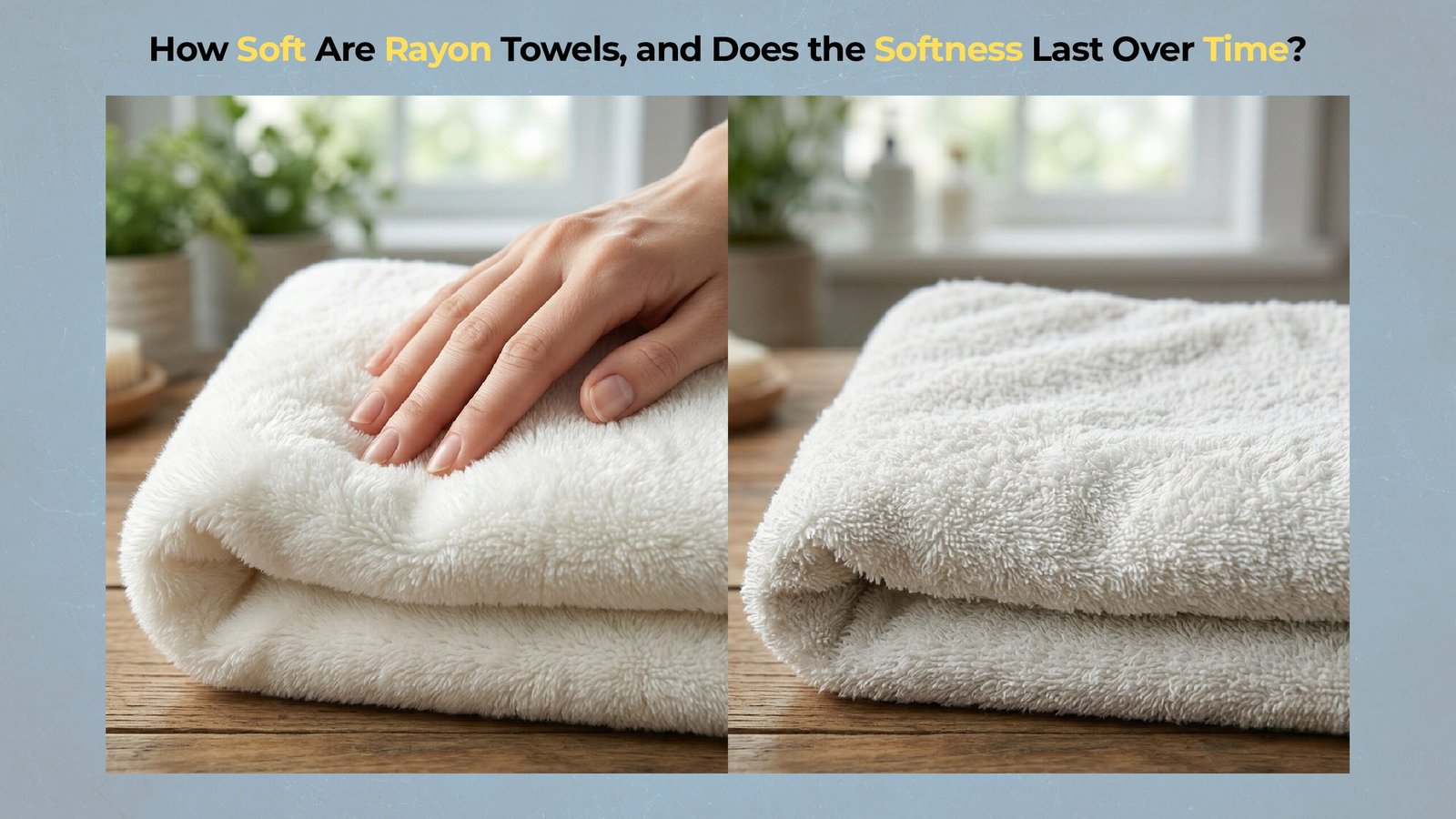
How Soft Are Rayon Towels, and Does the Softness Last Over Time?
An authoritative guide to the technical ergonomics and molecular integrity of regenerated cellulose linens.
Rayon towel softness typically provides a high-performance alternative for sensitive skin because the uniform, engineered cellulose fibers help reduce mechanical irritation compared to rougher fabrics. Unlike standard cotton, which relies on “hairy” staples—short, twisted fibers that protrude from the yarn surface—rayon filaments are extruded as continuous, smooth cylinders.
This cylindrical profile is the cornerstone of the material’s tactile superiority. By minimizing the number of exposed fiber ends, manufacturers can create a surface that slides across the dermal layer with significantly lower friction. To understand how regenerated cellulose behaves as a material family, read rayon softness, absorbency, and durability for the broader performance profile.
This mechanical smoothness reduces the cumulative micro-trauma often associated with high-frequency towel usage, making the fiber structure a technical asset in skincare routines.
Why Does Rayon Towel Softness Define the Premium Sensory Experience?
Rayon towel softness primarily dictates the quality of the post-bathing sensory experience by establishing a smooth interface that reduces friction irritation on the skin. To compare regenerated cellulose feel with broader buying criteria, review the towel softness factor before judging rayon hand-feel on its own.
Search Insight:
Rayon towels outperform cotton in skin-friction audits due to their engineered fiber uniformity. This “technical silkiness” results from controlled extrusion, making them the preferred choice for those seeking to minimize mechanical skin irritation.Identifying the “Low-Friction” Profile of Rayon Towel Softness
Rayon towel softness originates from a low-friction profile where uniform, engineered fibers provide a smoother surface than the staple ends found in standard cotton terry. Natural fibers like cotton have inherent convolutions and irregular surfaces; in contrast, regenerated cellulose is chemically processed into a viscous solution and then mechanically forced into consistent shapes.
The resulting fiber glide identifies rayon as a technical tool for minimizing friction irritation during high-frequency usage. In clinical or luxury settings, this reduction in surface drag is essential for maintaining dermal barrier integrity.
Does Moisture Affinity Impact Rayon Towel Softness?
Rayon towel softness depends on a high moisture regain capacity that can help maintain softness, though dryness may still lead to stiffness without proper care. For a moisture-management comparison that also affects tactile feel, see tencel moisture absorption when evaluating lyocell-style softness retention.
This high moisture affinity facilitates a “cool-to-the-touch” sensation, preventing the parched hand-feel of desiccated natural fibers. Thermal comfort results from the fiber’s ability to regulate surface temperature through efficient moisture turnover and evaporative cooling.
How Do Material Mechanics Define the Results of Rayon Towel Softness?
Material mechanics define rayon towel softness through high-precision fiber production and the engineered flexibility of the cellulose chains. The performance of these textiles is not a matter of chance but a result of rigorous manufacturing parameters that dictate how individual filaments interact under pressure.
Figure 1: Comparison of the engineered rayon filament against irregular cotton staples.
Analyzing the Fiber Production Process as a Driver of Rayon Towel Softness
Rayon towel softness results from the fiber production process, where liquid cellulose is forced through microscopic spinnerets to create fibers with reduced surface irregularities compared to natural staples. Since surface smoothness is also tied to construction standards, the towel quality factor is useful when comparing premium rayon, modal, and lyocell towels.
Technical Term – Spinneret: A multi-pored metal plate, similar to a showerhead, used in the extrusion process to dictate the uniformity, diameter, and cross-sectional shape of regenerated fibers.
Because these fibers are man-made, manufacturers control the “denier” (thickness), ensuring every loop in the terry pile provides consistent tactile flexibility and absorbency.
Does “Flexural Rigidity” Influence Rayon Towel Softness?
Rayon towel softness is facilitated by low flexural rigidity, a mechanical property that allows the textile to drape and conform to the body’s topography more effectively than standard cotton. High flexural rigidity results in a “stiff” fabric that resists bending; rayon’s molecular structure—comprised of shorter polymer chains than cotton—allows for greater internal movement.
How to Select High-Quality Textiles for Lasting Rayon Towel Softness?
Selecting for lasting rayon towel softness involves an audit of the specific cellulose variant and the Grams per Square Meter (GSM) density. If you want to judge whether soft texture will last, check the towel durability factor alongside this rayon softness guide.
Softness Retention Matrix for Rayon Towel Softness
| Fiber Type | Initial Softness | Softness Longevity | Best Use-Case |
|---|---|---|---|
| Standard Viscose | Highest (Silky) | Moderate | Guest / Low-Frequency Use |
| Modal (Beechwood) | High (Velvety) | High | Daily Residential Bath |
| Lyocell (Tencel) | High (Smooth) | Highest | Athletes / Frequent Wash Cycles |
Does GSM Optimization Benefit Rayon Towel Softness?
Rayon towel softness often performs well in the mid-weight range (around 500–600 GSM), depending on environment and use, providing absorbency without the stagnation risks of over-dense weaves. High-density towels (above 700 GSM) may feel luxurious initially, but they trap moisture deep within the pile.
Which Specific Laundry Steps Preserve Rayon Towel Softness?
Preserving rayon towel softness requires technical adherence to low-temperature laundering and mechanical agitation protocols that prevent molecular fiber degradation. Because softness retention depends heavily on laundering, the towel care instructions factor helps explain why rayon can feel silky at first but degrade under poor wash routines.
How Does the “Cool-and-Gentle” Wash Support Rayon Towel Softness?
Rayon towel softness remains stable when users maintain wash temperatures below 104°F (40°C), as higher temperatures can gradually weaken fibers over repeated cycles. Thermal stress can cause the cellulose chains to contract or “fibrillate,” leading to a fuzzy, pill-prone surface.
Why Does the “Low-Tumbler” Finish Maintain Rayon Towel Softness?
Rayon towel softness depends on the mechanical agitation of a low-heat tumble dry cycle because fiber alignment and bonding during drying can lead to a stiffer feel. When towels are air-dried without agitation, the fibers can form hydrogen bonds with one another, creating a rigid “crust.”
When Does Rayon Towel Softness Fail in the Long Term?
Rayon towel softness declines when improper maintenance cycles introduce chemical residues or thermal stressors that harden the molecular structure of the cellulose. If you are comparing rayon against stronger semi-synthetic cellulose options, review modal durability to see why softness longevity can differ.
Does Detergent Residue Act as a Barrier to Rayon Towel Softness?
Rayon towel softness is often masked by detergent residue because the high surface area of the filaments traps surfactant molecules that create a stiff, waxy film. Over-dosing detergent is the primary cause of “scratchy” towels.
How Can You Restore Pliable Textures to Revitalize Rayon Towel Softness?
Restoring compromised rayon towel softness involves executing chemical resets to dissolve mineral calcification and mechanical agitation to separate matted filaments. If your towel already feels rough or coated, run it through the towel care diagnosis engine to identify whether heat, residue, or washing errors are reducing softness.
Does Mineral Stripping Restore Rayon Towel Softness?
Rayon towel softness regains its original pliability when separate cycles of acetic acid (vinegar) and baking soda dissolve the mineral crust that locks regenerated loops. Acetic acid breaks down calcium and magnesium deposits, while sodium bicarbonate helps lift fatty acid residues from detergents.
⚠️ Critical Safety Warning:
You must use vinegar and baking soda in separate laundry cycles. Mixing them in the same wash neutralizes their chemical effectiveness, resulting in a salt solution that provides no stripping benefit.How to Verify Your Strategy with a Rayon Towel Softness Checklist?
Checklist: Rayon Towel Softness Maintenance Audit Checklist
- Material Audit: Does the label confirm a high-longevity variant like Modal or Lyocell?
- Thermal Check: Is the wash temperature strictly confirmed at or below 104°F (40°C)?
- Drape Test: Does the dry textile fold easily over the arm without rigid resistance?
- Chemistry Audit: Is the laundry routine 100% free of liquid fabric softeners?
Frequently Asked Questions
Is rayon actually softer than premium Egyptian cotton?
Yes, in terms of initial surface friction. While high-end cotton is exceptionally soft, it still consists of staple fibers with microscopic ends. Rayon’s continuous filament structure provides a silkier, lower-friction glide that is technically smoother on a molecular level.
Why do my bamboo rayon towels feel scratchy after only a few months?
Scratchiness is usually caused by mineral buildup from hard water or detergent residue. Because rayon fibers are highly absorbent, they can trap surfactants that harden during the drying process. A chemical reset with vinegar typically restores the original texture.
Final Summary: Does the Long-Term Profile of Rayon Towel Softness Fit Your Needs?
Operationalizing a rayon towel softness strategy requires a commitment to technical maintenance that honors the unique physics and mechanical glide of regenerated fibers. Ultimately, a superior bathroom experience is defined by the precise rayon towel softness engineering that turns a functional textile into a lasting sensory asset through technical care.
Technical Disclaimer
The information provided in this guide is for educational and comparative purposes only. Textile performance outcomes—specifically tactile softness and longevity—can vary significantly based on local water pH, mineral concentration, laundry appliance mechanics, and specific brand-proprietary chemical finishes. Always prioritize the instructions found on the manufacturer’s care label. TowelDaily assumes no liability for textile damage resulting from improper chemical stripping or thermal exposure.