A Technical Blueprint for Mechanical Exfoliation & Skin Barrier Safety
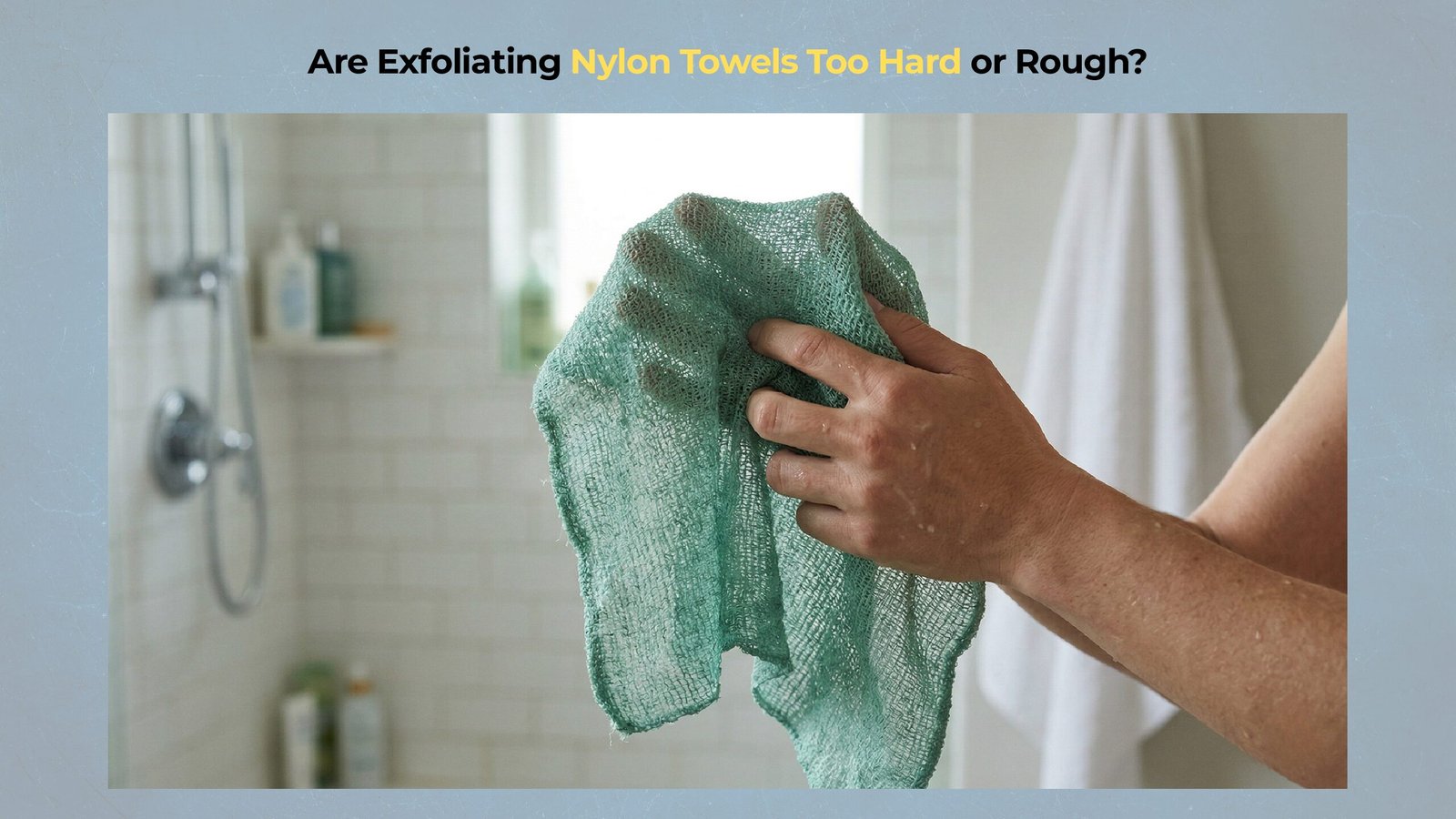
Exfoliating nylon towels provide an intentional level of mechanical friction designed to help dislodge loosely attached surface skin cells, though their perceived roughness typically varies based on monofilament density and hydration levels. While consumers often categorize this sensation as “scratchiness,” it is actually a functional specification engineered to optimize the removal of the stratum corneum. Understanding the textile engineering behind these tools is essential for maintaining a healthy skin barrier.
Why Does the Texture of Exfoliating Nylon Towels Matter for Skin Health?
Exfoliating nylon towels primarily dictate the rate of surface cell removal by providing the mechanical force necessary to dislodge loosely attached skin. This texture selection directly influences the skin’s biological response, balancing the need for deep cleaning with the requirement of maintaining epidermal integrity.
Identifying the “Mechanical Exfoliation” Benefit of Exfoliating Nylon Towels
Exfoliating nylon towels accelerate the removal of already shedding skin cells by physically shearing away dead surface material to reveal the smoother layers beneath. In clinical terms, Mechanical Exfoliation is the process of using a physical object to dislodge dead skin, which these towels help complete more efficiently than soft alternatives. The “rough” texture is specifically engineered to catch the edges of loose skin cells that standard soft towels typically bypass.
[Abrasive nylon weave] -> [dislodges loosely attached surface cells] -> [accelerates the removal of shedding skin in exfoliating nylon towels].
Do Exfoliating Nylon Towels Provide Circulation-Boosting Effects?
Exfoliating nylon towels cause a temporary increase in blood flow during use because the mechanical friction against the skin surface triggers localized Vasodilation. Vasodilation is the widening of blood vessels that results in the “invigorated” or pinkish skin tone observed after scrubbing. This increased blood flow can create a feeling of skin revitalization, though it should be understood as a transient physiological response rather than a source of long-term skin nutrition.
How Do Material Physics Define the Roughness of Exfoliating Nylon Towels?
Material physics define exfoliating nylon towels through the utilization of stiff monofilaments and textured knit patterns that maximize surface friction. Unlike cotton, which uses soft, absorbent fibers, nylon towels leverage the structural rigidity of synthetic polymers to achieve consistent abrasive performance.
Exfoliating nylon towel performance depends on how synthetic fibers behave under friction and moisture, which is better understood by comparing nylon vs polyester towels.
Furthermore, the effectiveness of these tools is tied to their specific polyester drying speed, which dictates how quickly the abrasive grid returns to its dry state.
Analyzing the “Monofilament Friction” in Exfoliating Nylon Towels
Exfoliating nylon towels generate high levels of surface friction because the single-strand nylon monofilaments are significantly stiffer than the multifilament bundles found in soft microfiber. By adhering to ASTM D1894 friction coefficients, these towels maintain a “hard” tactile profile. Monofilaments lack the internal “give” of spun yarns, ensuring the abrasive grid maintains its geometric shape even when fully saturated.
Does Weave “Grit” Determine the Results of Exfoliating Nylon Towels?
Exfoliating nylon towels rely on weave “grit”—the specific geometry of loops and ridges—to create textured contact points that increase exfoliation efficiency. This roughness is a direct result of the “Air-Jet” texturing process. This manufacturing method creates tiny, rigid loops in the knit that act as a high-friction grid, catching debris and shedding cells across the skin surface.
Which Specific Techniques Ensure Exfoliating Nylon Towels Are Used Safely?
Safe use of exfoliating nylon towels requires a technical shift from high-pressure scrubbing to a monitored circular motion that protects the skin’s protective barrier. Because of the material’s high friction coefficient, mechanical force must be carefully calibrated by the user to avoid micro-abrasions.
Executing the “Low-Pressure Circular Motion” with Exfoliating Nylon Towels
Exfoliating nylon towels deliver optimal results when users execute a low-pressure circular motion to allow the nylon’s high friction coefficient to do the mechanical work. You must explicitly avoid linear “sawing” motions with heavy force. Redness should be mild and transient; if irritation persists, it indicates that the mechanical force has exceeded the skin’s threshold for safe friction.
Why the “Lather-First” Rule Optimizes Exfoliating Nylon Towels
Exfoliating nylon towels maintain a safe performance profile only when paired with high-slip surfactants that act as a lubricant for the abrasive loops. A thick lather creates a fluid barrier that moderates the intensity of the monofilament contact.
[Abrasive nylon weave] -> [dislodges loosely attached surface cells] -> [accelerates the removal of shedding skin in exfoliating nylon towels].
How to Select the Correct “Grit” Level for Exfoliating Nylon Towels?
Selecting the correct grit level for exfoliating nylon towels involves auditing the monofilament density to match the specific sensitivity of different body zones. Use the following matrix to align your selection with your skin’s tolerance.
| Label / Tier | Texture Profile | Best Use-Case | Roughness Rank |
|---|---|---|---|
| Soft / Pastel | Fine weave; light | Sensitive Skin / Daily | 1 (Gentlest) |
| Normal / Standard | Balanced ridges | General Body / 2x Weekly | 2 |
| Super Hard | Thick monofilaments | Feet / Elbows / Back | 3 (Roughest) |
Why Should You Avoid Exfoliating Nylon Towels on the Face?
Exfoliating nylon towels typically remain restricted to “Body-Only” use because the high-grit weave may irritate delicate facial skin and increase redness. The facial epidermis is significantly thinner than body skin; using “Hard” or “Normal” grit towels in this region can lead to immediate barrier disruption and chronic sensitivity.
When Do Exfoliating Nylon Towels Become Too Rough for Your Skin?
Exfoliating nylon towels can become too rough when users ignore signs of barrier disruption or handle the material in a non-saturated state. “Roughness” is often as much about user protocol as it is about textile manufacturing.
Recognizing the “Over-Exfoliation” Signals of Exfoliating Nylon Towels
Identifying over-exfoliation from exfoliating nylon towels involves monitoring the skin for a waxy shine or a stinging sensation, signals that the mechanical action can disrupt the skin’s protective barrier. These symptoms indicate that the friction threshold for recovery has been exceeded. If these signs appear, a rest period of several days is mandatory to allow for epidermal repair.
Does “Dry-Handling” Increase the Roughness of Exfoliating Nylon Towels?
Exfoliating nylon towels exhibit their highest roughness levels when dry because water softens the fibers, making them feel less abrasive. This “Water-Softening” effect is purely mechanical; hydration increases the flexibility of the nylon polymer, rendering the loops less aggressive than they are in their dry, rigid state.
How to Restore Flexibility to Stiff or Scratchy Exfoliating Nylon Towels?
Restoring exfoliating nylon towels that have become less effective or matted requires a chemical reset to dissolve the mineral and soap scum deposits that lock the weave. Over time, calcium and magnesium from hard water can coat the monofilaments, making them feel unnaturally sharp or stiff.
Regular adherence to professional washing protocols is critical for safe reuse and maintaining the integrity of the abrasive grid.
Does a Vinegar Soak Restore Exfoliating Nylon Towels?
Exfoliating nylon towels regain their original “spring” when a 1:4 vinegar-to-water soak dissolves the mineral deposits that often develop in hard-water environments. We recommend a 30-minute soak once a month to prevent the development of a harsh, calcified texture.
How to Repair Frayed Monofilaments in Exfoliating Nylon Towels?
Exfoliating nylon towels require immediate maintenance if monofilaments fray, as loose strands can act like stiff wires that cause micro-scratches on the skin. Use the “Snip-and-Seal” method: utilize sharp shears to cut loose threads flush with the weave to ensure the abrasive surface remains uniform and safe.
Audit Your Strategy with the Exfoliating Nylon Towel Checklist
Systematic technical audits of your usage habits verify that current protocols for exfoliating nylon towels align with skin safety limits.
Checklist: Exfoliating Nylon Towel Safety Audit Checklist
- ☐ Grit Match: Is the hardness level matched to your skin sensitivity (Soft for beginners)?
- ☐ Frequency Check: Is the towel used no more than 2–3 times per week?
- ☐ Replacement Cycle: Has the towel been replaced within the last 6 months to prevent bacterial buildup?
- ☐ Integrity Audit: Is the surface free of frayed, wire-like monofilaments?
- ☐ Lubrication Check: Is the towel always used with a high-slip body wash?
Frequently Asked Questions (FAQ)
Are exfoliating nylon towels safe for daily use?While manufacturers often market them for daily use, dermatological safety protocols suggest a frequency of 2–3 times per week. High-grit towels used daily can lead to chronic barrier disruption and trans-epidermal water loss.
How do nylon towels compare to natural loofahs in terms of hygiene?Nylon towels are technically superior for hygiene. Natural loofahs are porous and retain moisture, creating a breeding ground for bacteria. Synthetic nylon monofilaments are non-porous and dry rapidly, significantly reducing microbial risk when compared to cotton moisture management.
Can these towels help with Ingrown Hairs or “Strawberry Legs”?Yes. The mechanical shearing action helpfully dislodges the surface debris that traps hairs beneath the skin. Regular use of a “Normal” grit towel can reduce the occurrence of folliculitis by keeping the follicle openings clear.
Should I avoid using these towels if I have a sunburn?Absolutely. Exfoliating nylon towels should never be used on compromised, inflamed, or sunburnt skin. The high friction coefficient will exacerbate tissue damage and delay the healing process of the epidermal barrier.
Why does my towel feel stiffer after a few months?This is typically due to mineral buildup (calcium/magnesium) from hard water or soap scum trapped in the weave. Refer to the “Vinegar Soak” restoration protocol to dissolve these deposits and return the fibers to their original flexibility.
Medical Disclaimer
The technical information provided in this guide is for educational and informational purposes only and does not constitute medical advice, diagnosis, or treatment. Always seek the advice of a qualified dermatologist or other healthcare provider with any questions you may have regarding a medical condition or skin sensitivity. Never disregard professional medical advice or delay in seeking it because of something you have read in this technical blueprint.
Final Summary: Does the Mechanical Profile of Exfoliating Nylon Towels Align With Your Skin?
Operationalizing a strategy for exfoliating nylon towels necessitates a technical commitment to precision that prioritizes long-term epidermal barrier health over immediate mechanical friction satisfaction. The trade-off between “Soft Comfort” and “Deep Mechanical Removal” is managed through informed grit selection and calibrated pressure. Ultimately, a superior exfoliation experience is defined by the precise exfoliating nylon towel management that turns a rugged mechanical tool into a safe, high-performance asset for skin health.
© Toweldaily.com